

 6 Colloquial Expressions with the Word Love
1. For the Love of God! (¡Por amor de Dios!)
An exclamation used to express exasperation, pleading, or reproach.
For the love of God, be quiet once and for all and stop talking nonsense!
In the past, this expression was used as a formula when begging for alms. This is where the Spanish word pordiosero (“beggar,” literally “one who asks for God’s sake”) comes from.
2. With Great Pleasure (De mil amores)
An adverbial phrase meaning “with great pleasure.”
María has asked me to accompany her on the trip, and I will gladly go with her.
In this context, love represents something noble, elevated, and sublime.
3. In Love and Harmony (En amor y compañía)
Meaning “in harmony, together.” It is normally applied to couples.
There they are — I have never seen them apart. They are always together, in love and harmony.
4. Actions Speak Louder Than Words (Obras son amores)
In other words, what truly matters are actions, not words.
Don’t make me promises. Behave as you should and show me what you need to show me — actions speak louder than words.
This expression is the first part of a proverb:
“Obras son amores, que no buenas razones” (“Actions are love, not fine words”), quoted by authors such as Lope de Vega in La Dorotea (1632) and Baltasar Gracián in El Criticón (1651).
5. For the Love of Art (Por amor al arte)
Selflessly. For pleasure or enjoyment. Without receiving any benefit or payment.
Every afternoon I give guitar lessons to a group of students, but they don’t pay me — I do it for the love of art.
Throughout history, there have always been artists who, even knowing that their work did not guarantee their livelihood, continued their creative labour. This expression refers to them.
6. Platonic Love (Amor platónico)
A spiritual, intellectual, unattainable love — and therefore never physical.
Times change, and so do ideals of men and women. But a stunning woman like Sophia Loren was, is, and always will be my platonic love.
We are referring to the type of love described by Plato in his Dialogues and faithfully followed by Renaissance knights — to such an extent that anyone who crossed the boundary from the spiritual to the physical could pay with their life, like Calisto in La Celestina, for example.
Heartbreak in Times of Saint Valentine
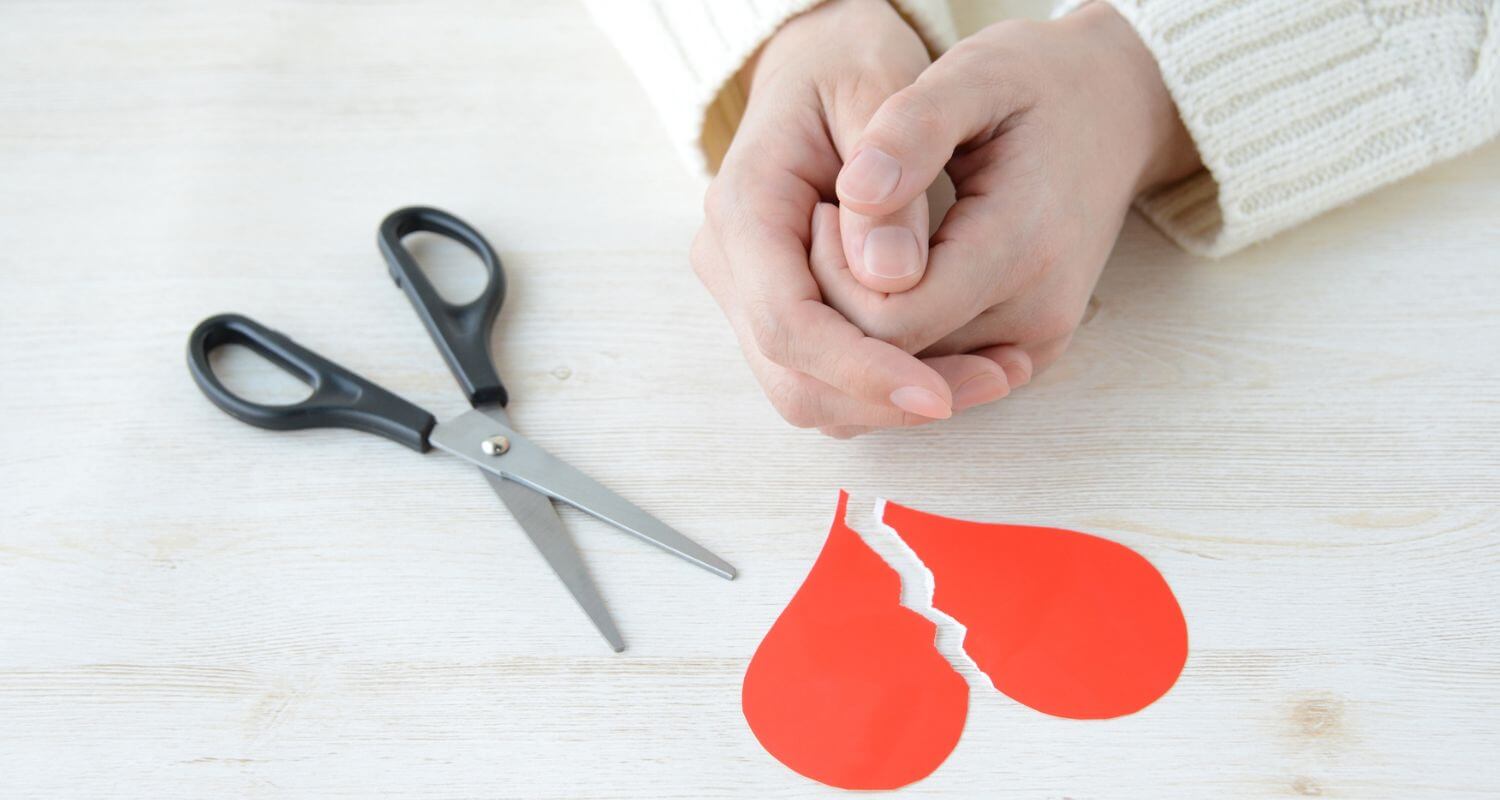 What colloquial expressions are most commonly used to talk about heartbreak?
Ah, love! Dear readers, love has served as inspiration for many artists: novelists, playwrights, poets, musicians, painters… Both love and heartbreak have inspired humanity’s finest creations. The muses appear when we are happiest or when sadness overwhelms us. And what drives both happiness and sorrow? Love — although, more often than not, it is heartbreak that stirs our deepest emotions.
During the first half of February, hearts and the colour red fill the streets of every city and town. Shop windows dress in their finest displays and tempt customers to buy that special gift that will make love blossom once again in couples’ hearts.
But all that glitters is not gold, and many people find themselves facing the bitter experience of heartbreak. Perhaps they have just broken up with their partner — the one who pulled away from a kiss (hacer la cobra) after discovering that their partner had cheated on them (poner los cuernos), breaking their loving heart into a thousand tiny pieces.
Recovering from romantic disappointment is not always easy. I still remember the day my last partner stood me up (dar plantón) in the Plaza Mayor. I was waiting under the clock with a bouquet of flowers. We were going out to dinner to celebrate Valentine’s Day. Then came the fateful phone call in which they told me we needed to “take a break” (darse un tiempo).
What? They had just stood me up and now wanted time apart? At that moment, I thought I would die. I downloaded a dating app (ligar) — all I wanted was to make them jealous — but all I received were rejections (dar/recibir calabazas).
Finally, I spoke to my best friend — who is now my current partner. I told her everything I had suffered for love, and she replied that I shouldn’t worry because “there is always a lid for every pot” (siempre hay un roto para un descosido). At that moment, I didn’t quite know how to take that expression, but it did manage to bring a smile to my face and helped me forget that relationship forever.
What Do These Expressions Mean?
-
All that glitters is not gold: not everything is what it seems.
-
To break up with someone: to end a relationship.
-
To pull away from a kiss (hacer la cobra).
-
To cheat on someone (poner los cuernos).
-
To break someone’s heart: romantic disappointment.
-
To stand someone up: to miss a date.
-
To take a break: to pause a relationship temporarily.
-
To flirt / to try to meet someone romantically (ligar).
-
To give or receive the brush-off (dar/recibir calabazas).
-
There is always a lid for every pot: there is someone out there for everyone.
But dear reader, I do not want today’s post to focus on heartbreak. Instead, I would like to take this opportunity to teach you some colloquial Spanish expressions that include the word love and form part of Spain’s popular heritage.
Before we begin, do you know the legend of Saint Valentine?
In the year 270 AD, Claudius II, Emperor of Rome, prohibited marriage because he believed married men made poor soldiers. In times of war, they would not want to leave their families.
If you would like to learn more about the legend of Saint Valentine, click on this link.
Dear reader, I hope love has knocked on your door, because when we are in love, we see everything through rose-coloured glasses¹.
So tell me — are you in love?
¹ To see everything through rose-coloured glasses: to be very optimistic. For you, there are no problems; everything is good, everything pleases you, everyone behaves kindly… You see everything in a positive light. Warm colours convey positive connotations, and the colour pink is associated with love and optimism.